
Insights from B Corp’s Take 10: A Decade of Redefining Business for Good

Last week, leaders from across business, sustainability, and social innovation gathered to celebrate a major milestone: ten years of the B Corp movement in the UK.
As an agency focused on helping purpose-driven brands, we were thrilled to attend the Take 10 event – not only a look back at the past decade but a powerful reminder of how far the purpose-led business community has come.
The room was filled with changemakers, from Dragon's Den's Deborah Meaden, to Deputy Mayor for London Mete Coban, to groundbreaking entrepreneurs building the future of sustainable business. What unfolded was far more than a celebration: it was a masterclass in how business can be a force for good.
From the beginning, the B Corp mission has been simple but ambitious: to reshape the role of business in society. What became clear across the panels and conversations is just how deeply that ambition has taken root. Today, B Corps aren't fringe disruptors; they're business leaders shaping categories, influencing consumer expectations, and setting new standards for transparency, innovation, and meaningful change.
The event explored everything from embedding purpose across complex organisations to the rising expectation that brands demonstrate – not just claim – positive social and environmental outcomes. The conversations reinforced a shared belief we champion daily: purpose and performance aren't competing priorities; they're mutually reinforcing drivers of long-term success.
Want to explore how purposeful storytelling can amplify your impact? Get in touch to book a consultation.

Insights from B Corp’s Take 10 Celebration
The Power of People Over Profit
Chris Turner, CEO of B Lab UK, opened with a statistic that reframes everything we think we know about the B Corp movement: "There are over 200,000 people working for B Corps. That's my favourite stat because it speaks to the fact it's not actually about businesses, it's about people. Ultimately the more people who are engaged and involved in this movement, the faster we'll get to our big lofty goals: driving systems change."
This isn't about certifications or badges. It's about building a movement of people who believe business can – and must – work differently.
Climate Justice is Economic Justice
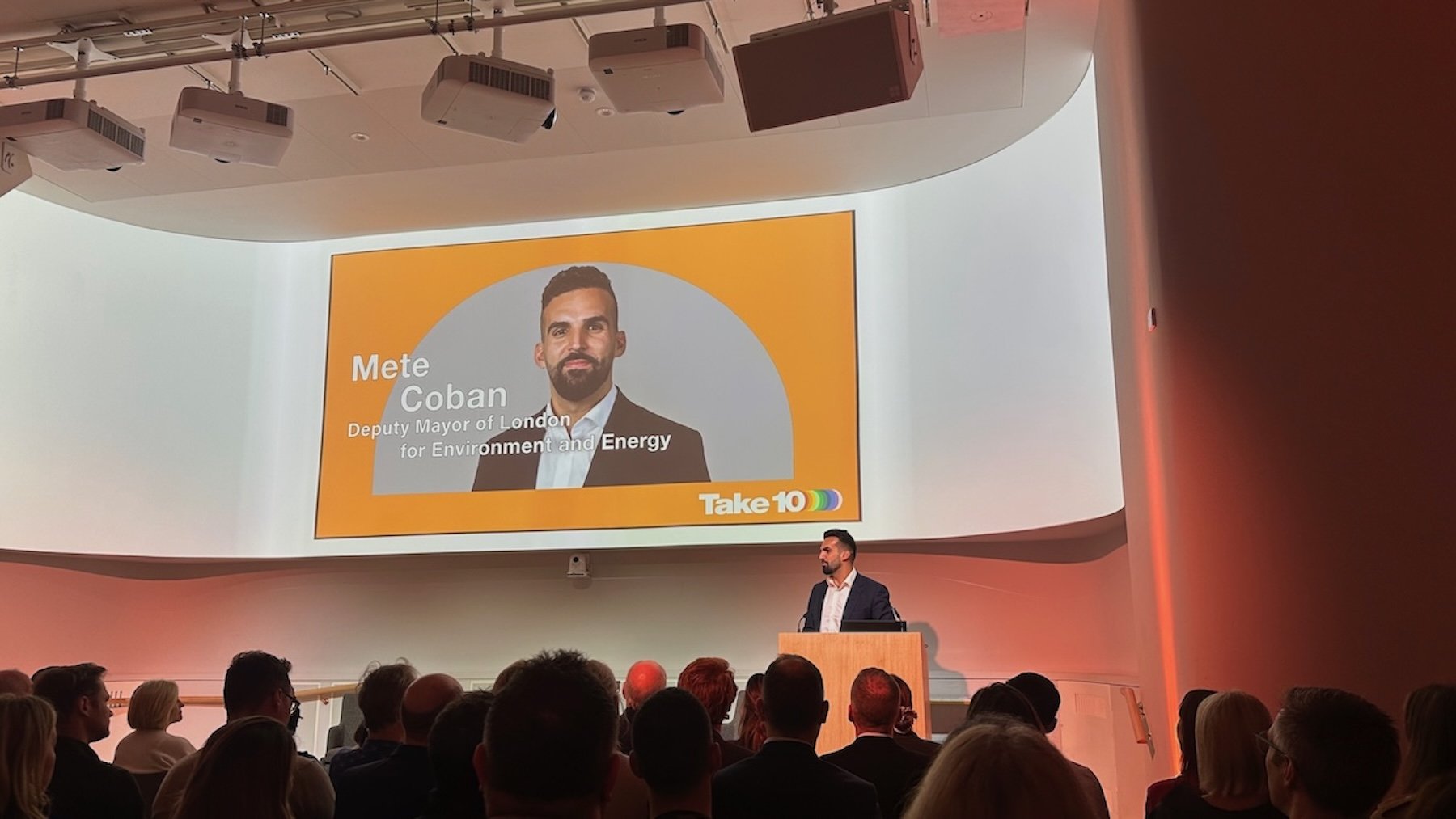
Mete Coban, Deputy Mayor of London for Environment and Energy, shared his London-coded story of getting involved in sustainability: "We are dependent on fossil fuels and every time something happens, Londoners are paying for it. Climate justice and social justice and racial justice, but also economic justice, these are all connected."
His observation that "businesses can work much faster than governments" wasn't a criticism of public sector work, but rather an invitation. Private sector innovation has the agility to lead on sustainability and social impact in ways that can complement and accelerate government action. It's a partnership, not a competition.

The Dragon's Perspective: Intent Matters
Deborah Meaden brought her trademark straight-talking wisdom to the stage, and her words deserve to be heard by every business leader navigating the sustainability space.
"They keep referring to me as the green queen, which is lovely but I don't want to wear badges," she began. "I am most pleased that my fellow dragons are also in the same place and that is a big shift over the years that I've been working in Dragon's Den."
Then came the honesty that makes her such a compelling voice: "There is no such thing as a perfect business. Everybody and every business has impact on the planet, but intent is very important. Intent is a very personal feeling and things change when people feel something."
This is the antidote to greenwashing and performative sustainability. It's not about perfection; it's about genuine commitment and continuous improvement. Intent matters because it drives action, and action – even imperfect action – drives change.
But Meaden didn't just appeal to hearts; she brought the numbers that speak to every bottom line:
B Corps are more likely to pay families a living wage
They're twice as likely to use only renewable energy
Collectively, they've saved over 200 billion litres of water
Since 2024 and 2025, B Corp turnover has been almost seven times higher than other UK SMEs
"What's your competitive edge?" she asked. For a growing number of businesses, the answer is clear: purpose.
Purpose as a Competitive Advantage
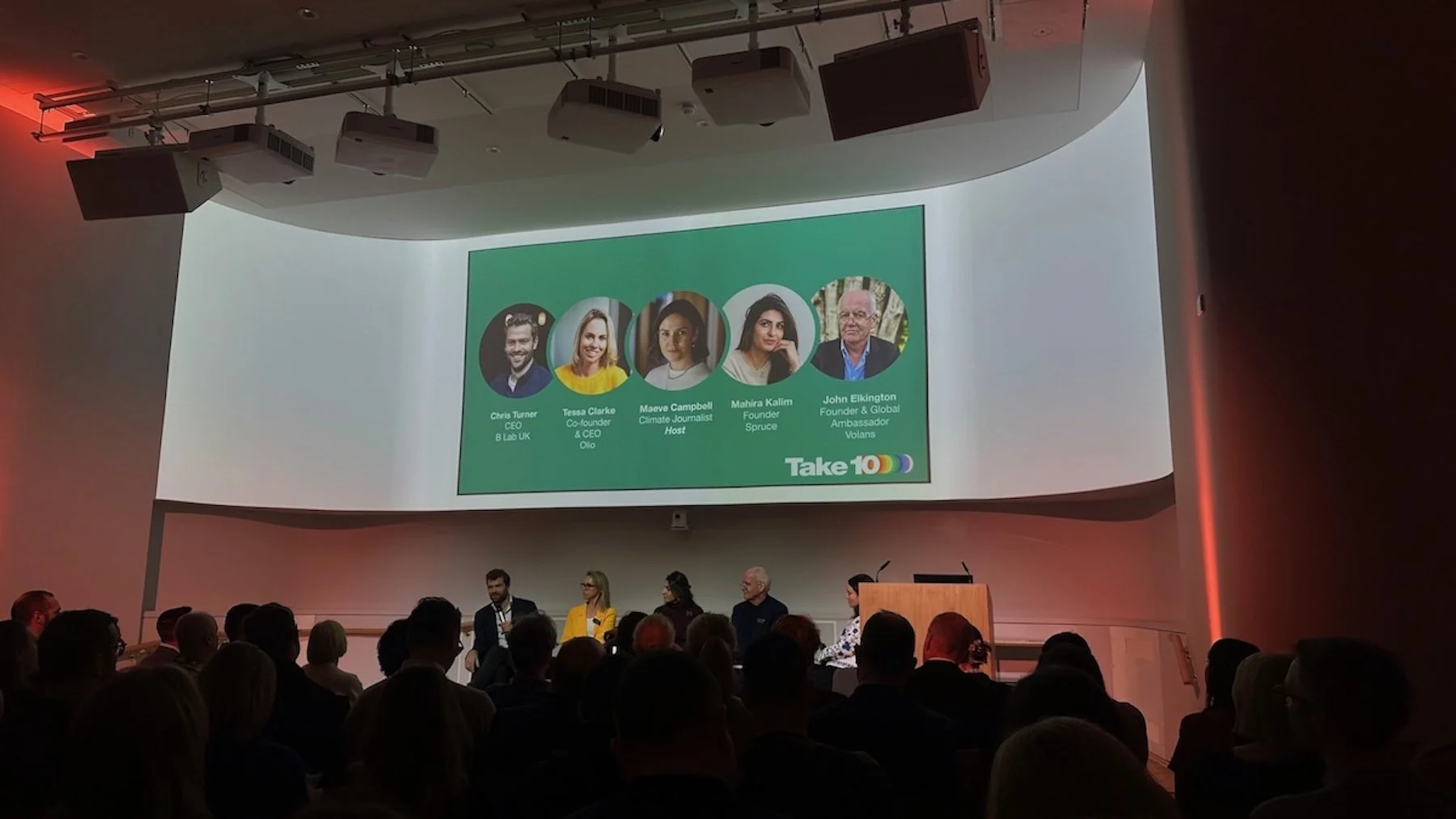
Tessa Clarke, CEO and co-founder of OLIO, the food-sharing app, captured this perfectly: "Purpose in business is a superpower."
OLIO's biggest challenge remains the commercial pricing of waste – a systemic issue that prevents easy wins – but Clarke emphasised three critical pillars that purpose-driven businesses must nail:
Purpose – the why behind your business
Product – delivering on your mission tangibly
PR – communicating your impact authentically
The tangible benefits? OLIO's insurance bill was reduced by £40,000 simply because of their B Corp certification. This is proof that doing good isn't just morally right; it's financially smart. Insurers recognise that B Corps are lower risk because they're built for long-term thinking, not short-term extraction.
Success Stories: From Pets to Partnerships
The room was full of inspiring examples of businesses thriving by doing things differently.
The co-founders of Omni shared a milestone that silences the myth that purpose constrains growth: they've just cleared £10 million in revenue, all whilst improving animal health for beloved pets across the UK. Purpose doesn't limit ambition; it focuses it.
Abena from Legacy Events spoke about creating intentional partnerships between charities and businesses based on human relationships. In a world of transactional collaborations and box-ticking CSR initiatives, this approach stands out. The strongest partnerships, she reminded us, are built on genuine connection and shared values, not contracts alone.
Regenerative Capitalism and Indoor Pollution
Mahira Kalim from Spruce, a refillable cleaning products company, revealed a fact that stopped many in the room: indoor pollution is five times worse than outdoor pollution. Her company tackles toxic chemicals in homes whilst eliminating single-use plastic – proof that B Corps often address multiple interconnected challenges simultaneously.
This holistic thinking was echoed by sustainability pioneer John Elkington, who introduced the concept of "regenerative capitalism." We're moving beyond simply doing less harm to actively restoring and regenerating our systems. It's not enough to be sustainable; we need to be regenerative.
The Power of Storytelling
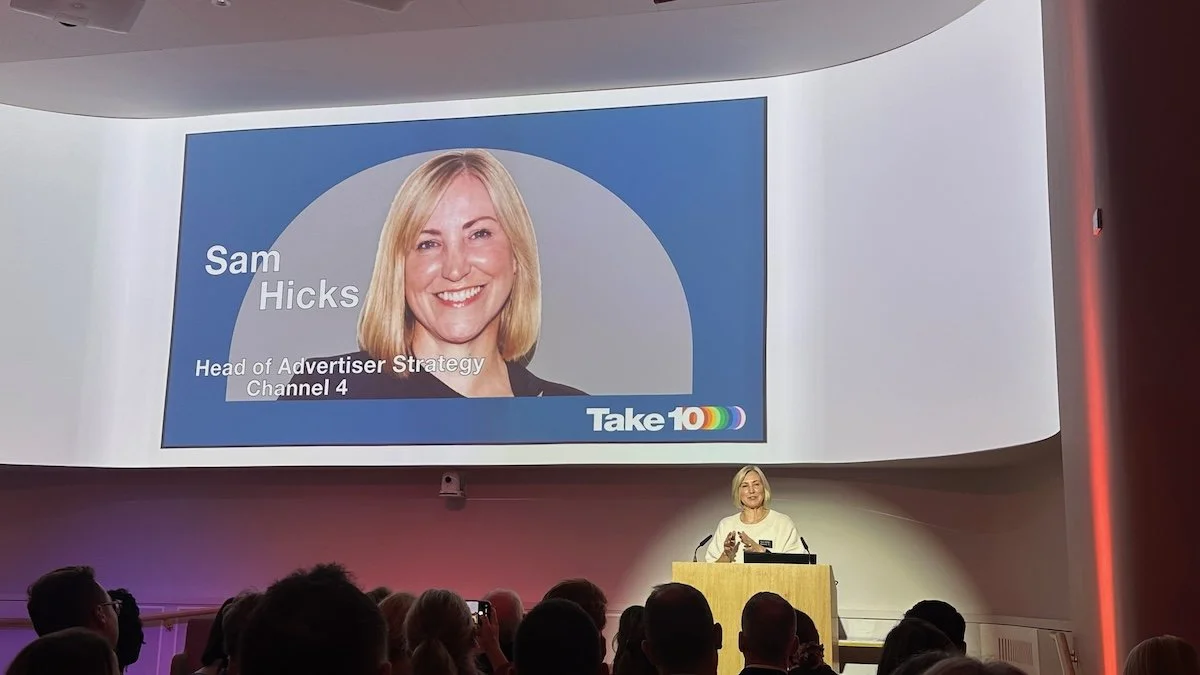
Sam Hicks, Head of Advertiser Strategy at Channel 4, discussed the broadcaster's commitment to reshaping media through initiatives like Black to Front and Black in Business, plus providing free advertising airtime to B Corp businesses.
"We want to reshape the media landscape," Hicks explained. "We want to demonstrate that having creativity and responsibility go hand in hand."
Her closing words resonated throughout the room and stayed with us long after: "Storytelling remains one of the most powerful tools in driving change and inspiring the collective action that we need."
Climate journalist Maeve Campbell echoed this sentiment. How we communicate impact is just as important as the impact itself.
Stories move people. Data informs, but stories inspire action.

What Ten Years Tells Us About the Next Ten
Perhaps the most energising part of Take Ten was the community itself.
A decade on, the B Corp movement has grown into a network of businesses that lead with values, challenge the status quo, and collaborate rather than compete when it comes to impact. Whether discussing fair work, circularity, governance, or behaviour change, the room was full of optimism paired with a commitment to action.
Walking out of the Take 10 event, one thing was abundantly clear: the B Corp movement isn't slowing down; it's accelerating. The businesses thriving aren't those treating sustainability as a side project or a marketing angle. They're the ones weaving purpose into their DNA from day one.
The competitive advantage is shifting.
Talent wants to work for purpose-driven companies. Customers increasingly choose brands aligned with their values. Investors are recognising that businesses built for the long term, with stakeholder capitalism at their core, are lower risk and higher return. The seven times higher turnover isn't a fluke; it's a signal.
But perhaps most importantly, the Take 10 event reminded us that business transformation isn't just about systems and structures.
It's about people. It's about intent.
It's about the 200,000 people working for B Corps who wake up knowing their work contributes to something bigger than quarterly profits.
As Deborah Meaden said, “There's no such thing as a perfect business.”
But there are businesses trying. There are businesses leading. There are businesses proving that another way is possible – and profitable.
The next ten years of the B Corp movement will be shaped by the businesses brave enough to ask not just "How do we grow?" but "How do we grow in a way that leaves the world better than we found it?"
As an marketing consultancy and production house dedicated to helping brands illuminate their purpose via powerful storytelling and behaviour-shifting strategies, we left the event inspired for 2026 - and reminded that the next ten years will be defined by the organisations willing to embed credibility, creativity, and accountability into everything they do.
Here’s to the next decade of B Corps leading the way and proving, once again, that better business is not only possible - it’s imperative.
Because as we learned at Take 10, storytelling isn't just marketing. It's how we inspire the collective action we need to build the future we deserve.
If you're ready to be part of that conversation, and your business needs storytelling that reflects that commitment authentically – we'd love to talk.
