Wildfires in Europe (and what Indigenous fire practices can teach us)
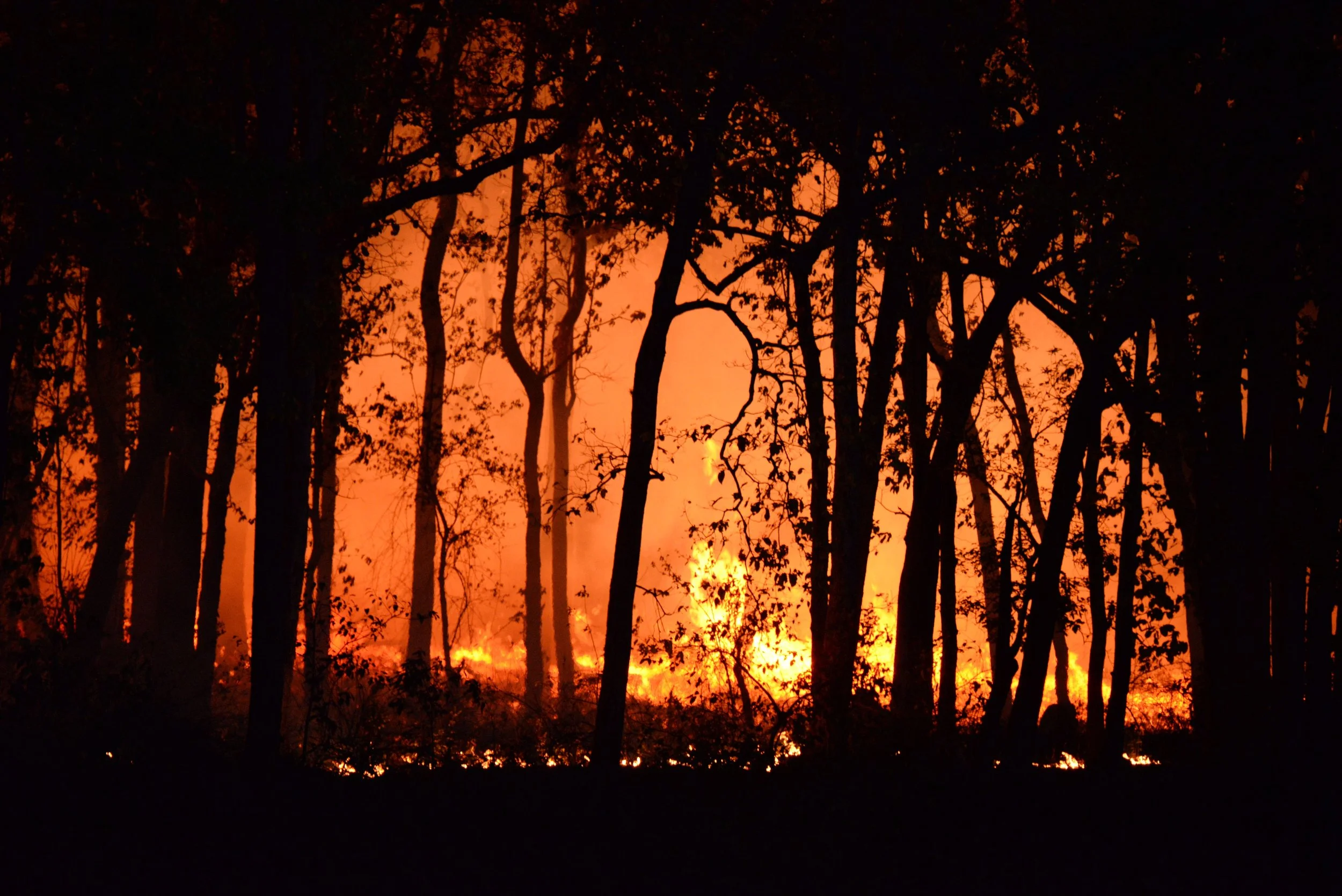
Ten days after the wildfire began in the Cairngorms National Park, I woke up to the smell of smoke.
I got up, rushed over to my window and was met with a haze of ominous clouds on the horizon. I could see my mum in the garden, taking in the washing before the thick scent of smoke could wrap around it. My dad was going around the house closing all of the windows.
There was a slight sense of panic in the air as we all wondered: was the fire spreading, heading straight towards us?
Fortunately for me and my family, the fire was still 70-odd miles away.
But as the day went on, the smoke completely enveloped our home. The visibility was so poor I could hardly see to the end of my garden, and it was uncomfortable to be outside for even short periods of time. It made me question something I thought I already understood.
Climate change had always felt like it was something happening elsewhere - in headlines, research papers and statistics. It’s something I care deeply about, but I’d never felt like it was happening to me. This is what psychologists have called “psychological distance” of climate change. The tendency to treat seemingly far off risks as less immediate than nearby ones, even when rationally, we know that they matter.
But the climate crisis doesn’t respect distance — just as perhaps we, as a global majority, have not respected our climate.
The smoke traveled 70 miles to remind me that climate change is indeed right here, on my doorstep.
Fire as productive, not destructive
As the last few weeks have gone by, I’ve put my budding anthropologist’s hat on and been digging into how Indigenous knowledge and practices from around the world can help mitigate the recurring and increasingly prominent threat of wildfires.
One of my key learnings is that fire has been a tool of care for far longer than it’s been treated as a threat.
In Canada for example, First Nations across British Columbia have documented at least 70 different traditional uses of fire, from reducing invasive species to promoting habitats for wildlife, food and medicinal plants. Known as “cultural burning”, areas of land are burned (in controlled settings) in order for future benefits such as the rejuvenation of flora and fauna.
In Australia Aboriginal cultural burning is thought to be one of the oldest continuous land management practices on Earth, and has been used for over 60,000 years to reduce fire hazards and protect biodiversity. These fires are known as “cool fires”, they are controlled, slower and gentle, compared to the blazes that have been dominating our headlines. And in Bolivia, Indigenous communities in the Amazon have practiced similar fire logic; small, rotational burns spread out across the dry season, which creates a patchwork of burnt and unburnt land rather than one uncontrolled blaze.
These practices of intentional burning are striking in that they occur on three continents with three distinct and varied cultures, yet they are all done with stewardship of the land and its inhabitants. It demonstrates that when fire is used with knowledge and good intention, it is not the enemy of the land that it is so often made out to be in the West.
So, are any of these practices being implemented closer to home? The honest answer is: kind of.
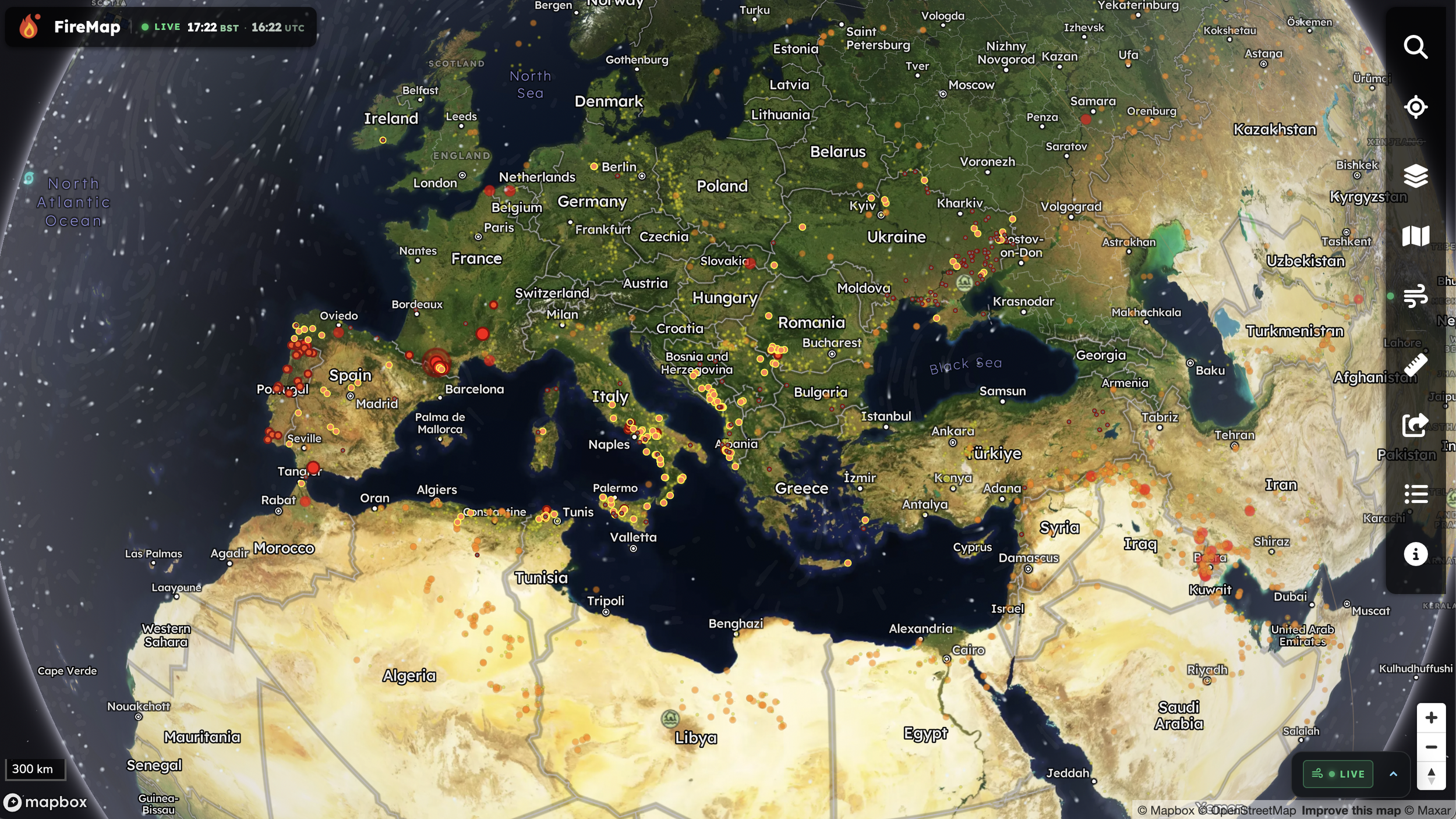
The website Firemap Live shows all of the fires burning around the world in real-time
Fire is not the enemy
In 2025 alone, more than 1 million hectares burned across the EU (for context, that is just over 6 times larger than the whole Greater London area!). The responses have included Portugal and Spain developing national prescribed burning programmes, in which they use controlled fire to reduce the fuel loads before wildfire season hits. However, these ‘prescribed’ burnings are technical, state run tools, that use fire as a device rather than the cultural relationship to land or knowledge system that we see when cultural burnings take place.
In this case it is harm reduction, not stewardship, that dictate these flames.
Here’s where this distinction matters: in 2019, after wildfires tore through the Indigenous Territory of Lomerío in Bolivia, the country’s Forest Management Agency started to threaten Indigenous people with criminal prosecution for using fire in their own livelihood practices - ones that have been used for generations.
Meanwhile, governments are increasingly seeking to use variations of prescribed burning as “forward-thinking” policy.
Why is it that the same basic acts of burning small, intentional fires for preservation and prevention of something worse, can be criminalised in one context, yet celebrated as progressive policy making in another?
It appears to be dependent on who is holding the lighter.
What can Europe learn from Indigenous fire practices?
This leads me to ask, is it okay for places like Europe to draw on Indigenous knowledge? I think that although there is not a definitive answer, and it’s most certainly not my place to say, it definitely matters how countries and states go about it.
Canada is leading by example with a model that has explicitly committed to cultural burning remaining Indigenous led, so that the practice is not misappropriated. The “Indigenous Fire Circle” has been created in order to guide the relationship between state and the many Indigenous people. This is the type of collaboration that needs to happen. Rather than ‘borrowing’ a technique and not giving any thought to the people who developed it - or worse than that, criminalising them, this method of Indigenous guidance is so important.
I don’t think that the answer is for Europe to simply import Indigenous fire practices. It wouldn’t work without the relationships and knowledge systems they come from. The underpinning principle that fire resilience is so closely tied to the relationships people have with land and each other, cannot be ignored. So it’s not a question of “can we use Indigenous fire knowledge?” but more are we willing to build the kind of relationship to land that made it work in the first place. The technique without that relationship isn’t stewardship, it’s simply control.
The website Firemap Live shows all of the wildfires that are burning across the globe right now, in real time. I couldn’t quite believe it when I first found the website. I think everyone should be made aware of the true scale and threat that we are facing with these fires, and hopefully it will demonstrate that what we are doing now is simply not enough.
*
At Good Form, we believe that long-lasting change begins with storytelling for good. From podcast production to social media campaigns, we’ll help your message land with exactly the right people. Get in touch.