What can the World Cup tell us about culture, identity, and power?
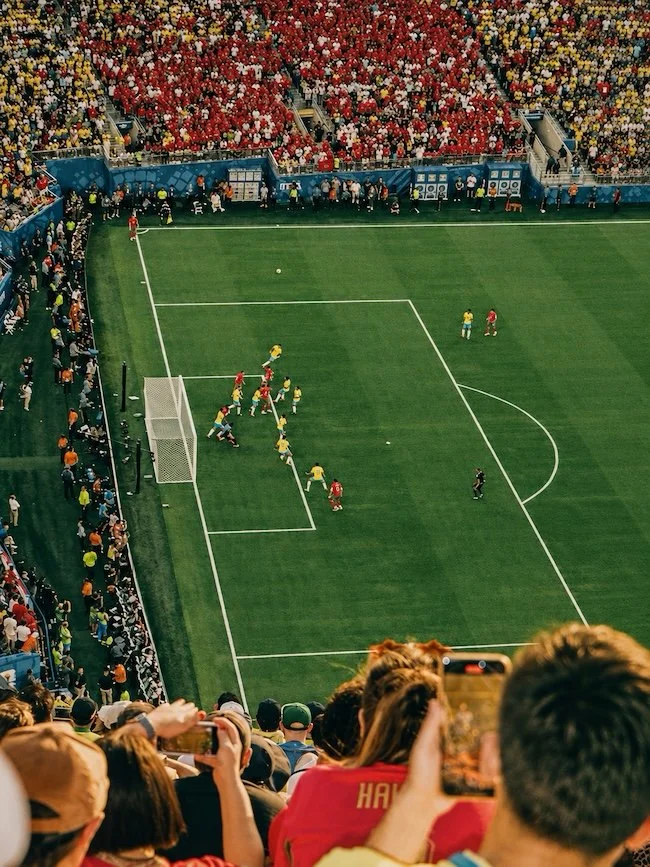
There is something about the World Cup that turns everyone into a football expert.
Suddenly your uncle or aunt is discussing formations like they manage Real Madrid. Someone at work asks, "Did you watch the match?" before you've even opened your laptop. The group chat is arguing about VAR. Someone's dad is shouting at the TV like the referee can hear him from the living room. And somewhere, someone who has never watched a full 90 minutes is confidently saying, "To be fair, their midfield is weak," as if they've been scouting for years.
The World Cup does that. It pulls people in. It gives us drama, snacks, national flags, pub screens, living room debates and the emotional journey of watching penalties with your hands over your face.
But underneath the noise, the goals and the "I can't believe he missed that" moments, the World Cup also tells us something bigger about culture, identity and power.
Because when nations meet on the pitch, it’s about more than ‘just’ football.
We like to imagine the World Cup as a level playing field: 11 vs 11, same pitch, same ball, same 90 minutes. Seems simple enough, doesn’t it?
Well… not quite.
Countries do not arrive on the pitch with the same histories, resources, influence or media attention. Some are already treated as "footballing nations." Others still have to prove they belong, despite qualifying for exactly the same tournament.
History enters the stadium in subtle ways. Many matchups carry relationships shaped by empire, colonialism, migration, language and global media. That doesn't mean every game should become a history lesson. Nobody is asking you to pause a counterattack and say, "Before this penalty, let's discuss global power." (Heads up: you might not be the most popular person at the pub if you do this).
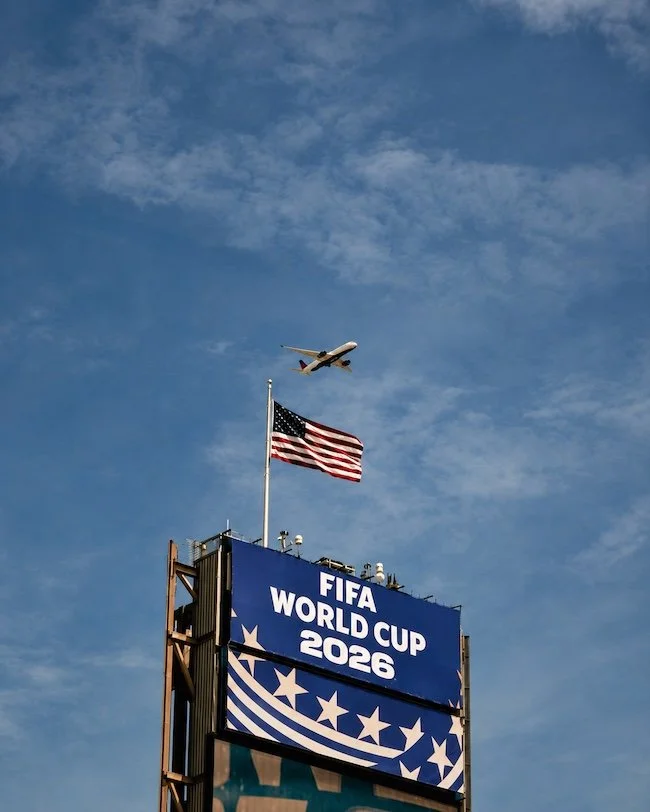
How culture, history and power dynamics appear on the pitch
But football commentary doesn't exist in a vacuum outside of the world we live in and its politics. The way teams are described, celebrated or underestimated can reveal historical patterns of power. And sometimes, even if nobody asked for a mid-match monologue, the conversation does circle back to the political and economic state of the world.
African teams, for example, are often talked about through passion, pride, physicality and surprise. None of these are bad qualities, but when they become the default language, something gets lost. European teams are more often praised for structure, intelligence and tactical maturity, as if those qualities don't also exist in Accra, Rabat, Lagos, Dakar, Abidjan or Cairo.
It raises a simple question: who is perceived as strategic, and who is only viewed as “exciting”?
Language shapes understanding. When commentators praise a team's "heart" but rarely mention their organisation or coaching, audiences absorb that framing. Likewise, when a non-Western team beats a European giant and it's headlined as a "shock result" rather than simply the better team winning, that language matters.
The expanded 2026 World Cup shows how the football landscape is shifting. With the tournament growing to 48 teams, Africa now has nine guaranteed places plus a playoff route, its biggest presence yet. More teams mean more playing styles, more stories, and more chances to challenge old assumptions about who belongs among the game's elite. The footballing map is changing, and the trophy no longer feels destined consistently for the same familiar few.
For countries that have historically sat outside the centre of global power, beating an established football nation can mean more than three points. It can become a moment of visibility, recognition and pride. A goal can change how a nation is seen. A celebration can become a symbol. A teams presence can make millions of people feel seen.

National identity versus community
This is also why national identity becomes so intense during the World Cup. For a few weeks, flags appear everywhere. People who normally can't agree on dinner suddenly agree that "we" need to defend better. Political geographers call this nationalism: the feeling that people belong through shared history, culture and identity. Sometimes it's obvious, like flags and anthems. Sometimes it's as simple as saying, "We played well," when you never left the sofa.
Football creates what political scientist Benedict Anderson called an ‘imagined community’. Millions of strangers become connected through one match, one goal and one collective scream.
That can be joyful. It can also raise uncomfortable questions. Who gets included in the national story? Who gets excluded? Which teams are allowed to just be football teams, and which are expected to carry the weight of conflict, migration, religion or politics?
And that unevenness shows up off the pitch too. Some teams are discussed mainly through their football, while others are asked to answer for their country’s politics every time they step in front of a microphone. Ahead of Iran’s opening match at the 2026 World Cup, much of the conversation focused on visas, diplomacy and geopolitical tension. Iranian players were repeatedly asked about unrest and state politics, a pressure that, as captain Mehdi Taremi put it, “undermines that joy” the tournament is meant to bring. Meanwhile, American or European players are less consistently expected to explain their governments' actions.
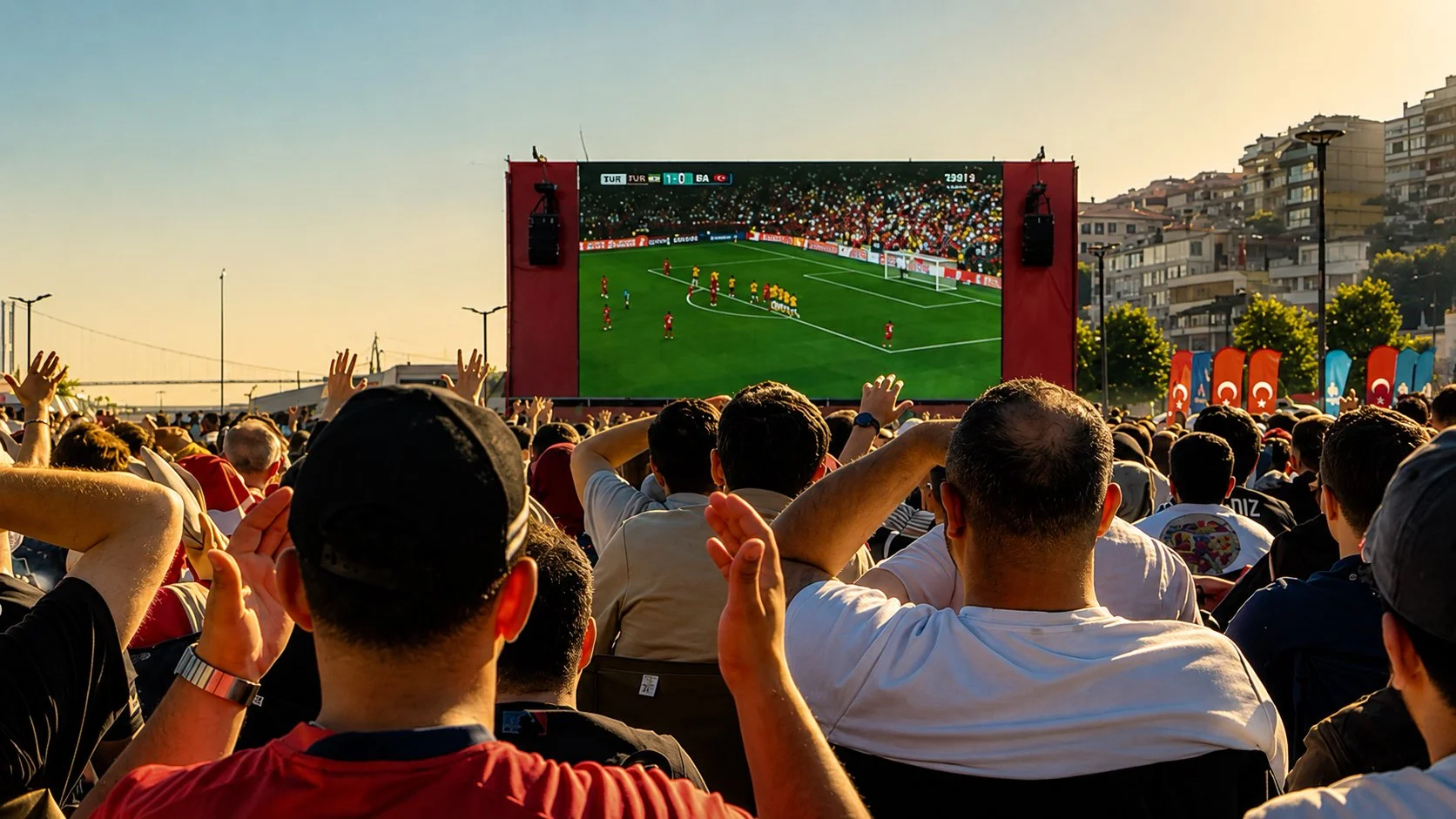
Is football political?
The issue isn't that politics should never enter football. Football has always been political because culture, money and borders are political. The issue is that political scrutiny is not applied evenly.
So maybe the question isn't whether politics should stay out of football. Maybe it's whose politics we are trained to notice.
The World Cup is unpredictable. That's why we love it. But it also shows us how the world imagines itself. Who is treated as the standard? Who is treated as the outsider? Who is praised for intelligence, and who only for passion?
African and non-Western teams haven’t copied a European game. They’ve reshaped it through their own styles, tactics and traditions. They bring passion, yes, but also intelligence, discipline and planning.
So as the World Cup continues, enjoy the football. Argue with the TV. Ask your colleague if they watched the match, even though half the office is definitely pretending they understand the offside rule.
But also pay attention . Notice how different teams are described. Who gets to simply be a football team? And who is expected to represent something much bigger?
Because when nations meet on the pitch, historical context is often there with them. You just have to notice it.
*
If you’ve got a creative project that requires a nuanced understanding of culture, identity, and history, explore our Cultural Consultancy Services.